
As we prepare to celebrate the 400th anniversary of the Mayflower‘s historic voyage from Plymouth to Massachusetts, we celebrate the West Country’s links to New England and SDNQ‘s own link with the New England Historic Genealogical Society, which was one of the first subscribers to SDNQ in 1888, by reprinting two articles from the back issues of SDNQ:
Dorset People in New England by George Andrews Moriarty Jr., and the following article by Glanville James Davies, Dorset Editor of SDNQ 1983-2009, which appeared in SDNQ vol.36 (September 2007), pp.172-174:
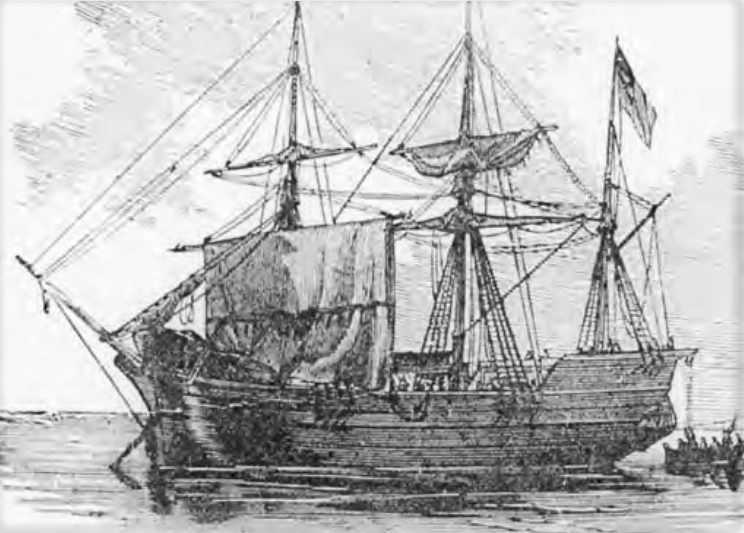 From the early years of the 17th century families from Dorset – principally from Dorchester – gave up life in England and oved to North America. Undoubtedly, the Dorchester Company, which promoted the growth of the infant colony, painted a rosy picture of life there, but the opinions of others, like those disillusioned few who returned to England, or writers like John Josselyn[i], must have given intended emigrants some concern.
Emigrants were setting out on a long sea voyage to begin a new life in a land in which there were no manufacturers. Everything they needed, from the simplest item, had to be carried across from England or traded for from other colonists. Josselyn estimated that the cost of clothing, food for a year, household implements, iron ware and wooden ware, might amount to £37. That was a figure beyond the reach of most emigrants. Few of those who left England possessed much of value because wages for skilled workers averaged only £38 p.a., and labourers received £15 p.a. Houses of the gentry were filled with furniture, but houses of artisans and the labourers generally only had the bare necessities, so a sale of all household goods would only fetch between £13 to £18. Only those with a little land to sell could hope to gather all the money that was needed, for their sales on average amounted to £61.[ii]
Emigrants would pay for their passage to America, and for the duration of the voyage – which took about ten to twelve weeks – they were provided with the same meals as the crew. Food on board was monotonous, and consisted of ‘Beef or Porke, Fish, Butter, Cheese, Pease, Pottage, Water-gruel, Bisket, and six shilling Bear.’ Josselyn recommended that emigrants should also have some private provisions to supplement the monotonous diet, and to carry also some essential medical supplies. He recommended ‘(in case you, or any of yours should be sick, at Sea) Conserves of Roses, Clove-Gilliflowers, Wormwood, Green-Ginger, Burnt-Wine, English Spirits, Prunes to stew, Raisons of the Sun, Currence, Sugar, Nutmeg, Mace, Cinnamon, Pepper and Ginger, White Bisket or Spanish rusk, Eggs, Rice, juice of Lemmons well put up to cure, or prevent the Scurvy, Small Skillets, Pipkins, Porrengers and small Frying pans.’[iii]
Helpfully, he listed some other items which were essential:
Apparel for one man:
| l | s | d | |
| One Hatt | 0 | 3 | 0 |
| One Monmouth Cap[iv] | 0 | 1 | 10 |
| Three falling bands[v] | 0 | 1 | 3 |
| Three Shirts | 0 | 7 | 6 |
| One Wastcoat | 0 | 2 | 6 |
| One suit of Frize[vi] | 0 | 19 | 0 |
| One suit of Cloth[vii] | 0 | 15 | 0 |
| One suit of Canvas[viii] | 0 | 7 | 6 |
| Three pairs of Irish Stockins | 0 | 5 | 0 |
| Four pairs of Shoos | 0 | 8 | 0 |
| One pair of Canvas Sheets | 0 | 8 | 0 |
| Seven ells of course Canvas to make a bed at Sea for two men to be filled with straw[ix] | 0 | 5 | 0 |
| One course Rug at Sea for two men | 0 | 6 | 0 |
| Sum Total | 4 | 6 | 0 |
In addition, they were advised to take sufficient food to New England to last them for at least one winter season, and that should include:
| l | s | d | |
| A Hogshead of English Beef will cost | 5 | 0 | 0 |
| A Hogshead of Irish Beef will cost | 2 | 10 | 0 |
| A Barrel of Oatmeal | 0 | 13 | 0 |
| A Hogshead of Aqua vita will cost | 4 | 0 | 0 |
| A Hogshead of Vinegar | 1 | 0 | 0 |
| A bushel of Mustard-seed[x] | 0 | 6 | 0 |
While in New England they would also need:
| l | s | d | |
| One Iron Pot | 0 | 7 | 0 |
| For one great Copper Kettle | 2 | 0 | 0 |
| For a small Kettle | 0 | 10 | 0 |
| For a lesser Kettle | 0 | 6 | 0 |
| For one large Frying-pan | 0 | 2 | 6 |
| For a small Frying-pan | 0 | 1 | 8 |
| For a brass Morter | 0 | 3 | 0 |
| For a Spit | 0 | 2 | 0 |
| For one Grid-Iron | 0 | 1 | 0 |
| For two Skillets | 0 | 5 | 0 |
| Platters, dishes & spoons of wood | 0 | 4 | 0 |
As an indication of some of the dangers facing the emigrants, Josselyn recommended that every man should be equipped with ‘one long piece, five foot, or five and a half near musket bore, one Sword, one Bandaleer[xi], one Belt, Twenty pound of powder, sixty pound of shot or lead, pistol and Goose shot.’
Footnotes:
[i] John Josselyn (fl. 1638-1675), an English traveller who visited New England for 15 months in July 1638, and again from 1663 until 1671.
[ii] J. Burnett, A History of the Cost of Living (Penguin, 1969), pp.123-4.
[iii] Josselyn had received some medial training, and he was aware that the shipboard diet and lack of exercise would cause much ill-health among the emigrants. Checking his list in J. Woodall, The Surgion’s Mate (1617), we see that most of the remedies were intended ‘to staye the weake stomake from vomiting’, ‘raiseth the appetite’, and ‘asswageth the paine of the teeth’. In particular, his warning against scurvy, follows exactly the opinion of Woodall who wrote that ‘almost every sicknesse at sea ends in scurvy… with death attending thereon.’
[iv] A coarse, thick, felted, 2ply wool cap, much favoured by sailors.
[v] Neckbands
[vi] (frieze) thick woollen clothes.
[vii] Work clothes.
[viii] For rain.
[ix] Eight and three quarter yards, presumably to allow enough canvas to make a tent or covering, for many had to sleep on deck.
[x] Hogshead (65 gallons); Bushel (8 gallons); Aqua Vitae (brandy).
[xi] A Bandolier was a broad belt worn over the shoulder and across the chest which had twelve small leather cases containing powder and ammunition.
Visit Spotlight on SDNQ to discover more research themes.