

The following article by Alan Kittermaster of the University of Sussex was published in SDNQ, Vol.31 (September 1983), pp.306-315, and is reproduced here in memory by Dr Alan Kittermaster who died on 23 May 2022.
Sir Edward Phelips (c.1554-1614), Speaker of the House of Commons, Master of the Rolls, Chancellor of the Duchy of Cornwall, and builder of Montacute House: A biographical sketch.
Job security was a luxury enjoyed by a few crown servants during the reign of James I. The struggle to gain and hold positions at court was carried on in an atmosphere heavy with intrigue, suspicion and fear. But looking at a level beneath the scandals and the spectacular careers of men like Buckingham, Cranfield and Bacon, it is possible to distinguish a handful of lesser officials, who managed to survive and prosper in government service in the early Jacobean era despite the hazards of the times. Among them was Sir Edward Phelips, who is perhaps best remembered nationally as Speaker of James’s first Parliament and in Somerset as the builder of Montacute House. His performance in the 1604-1610 Parliament has been studied in considerable detail, and it is now possible to give a general account of his career which updates and amends the entry on him in the Dictionary of National Biography, which is, by its high standards, rather disappointing.[1]
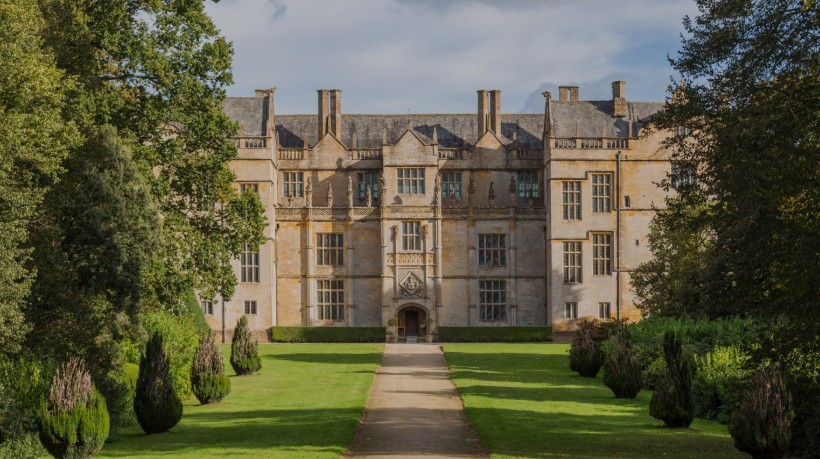
Sir Edward Phelips was born about 1554, the youngest of the four sons of Thomas Phelips (1500-1588), a minor Tudor officeholder, who amassed a considerable fortune through the purchase and exploitation of former monastic lands in Somerset and Dorset in the mid-16th century. In his last years, Thomas, paralysed from the waist down and suffering it appears from something akin to senile dementia, was plagued by quarrels with his three eldest sons, which prompted him to leave the lion’s share of his estate to Edward.[2] There is no record of young Phelips having gone to Oxford or Cambridge, but we know that he entered the Middle Temple on February 14th 1572 and was called to the bar in 1578, where he quickly built up a flourishing practice.[3] In the year that he received his inheritance (1588) he began building Montacute House, a magnificent structure, which was completed in about 1601. This beautiful honey-coloured mansion, rescued from demolition by the National Trust in 1931, remains one of the finest examples of Elizabethan domestic architecture.
Phelips sat inconspicuously in five Elizabethan Parliaments, representing borough seats in 1584 (Bere Alston), 1586 (Weymouth), 1593 (Penryn) and 1596 (Andover), and in 1601 was returned as one of the knights for Somerset. It is probable that he was the ‘Phillips’ employed by Sir Anthony Mildmay during his embassy to France in 1596-7 and recommended unsuccessfully by him to Cecil for the post of Secretary of the Court of Wards in 1599, and a ‘Phillips’ is listed among Cecil’s retinue for his visit to France in 1598, which could also well have been him.[4] He married twice: firstly Margaret Newdigate who died suddenly in 1590, having borne him two sons, Robert and Francis, and secondly in about 1601 or 1602 Elizabeth Pigot, daughter of Thomas Pigot a successful lawyer. Her only child by Phelips died in infancy in January 1603. On February 11th 1603 Phelips was appointed a Sergeant, but because of the Queen’s death did not formally receive his degree until the new reign.[5] In view of this later contact it seems likely that Cecil had a hand in Phelips’s promotion, and equally that by his influence Phelips’s eldest son became a page to Elizabeth I in about 1603. On July 23rd 1603 he and his son Robert were among the vast number knighted by the King in the royal garden at Whitehall before the coronation ceremony. He was shortly afterwards commissioned as an assize judge and joined Sir Christopher Yelverton on the Oxford circuit.[6] In November he took part in the trial of Sir Walter Raleigh. Although he had no share in Sir Edward Coke’s outrageous conduct of the prosecution, Phelips was hostile to Raleigh and sat on the commission which investigated Raleigh’s claim to the ownership of Sherborne.[7]
In 1604 Phelips was returned for Somerset for the second time. He was elected Speaker of the House of Commons, though he was not an obvious or a popular choice. Sir John Herbert’s motion proposing Phelips was followed by silence, ‘The House not naming any’ – and the same contemporary account continues:
‘At last he being named again, some few caried “A Phelips,” some cried “No, No,” but then an ancient Parliament man, directing the House, said it was not sufficient to say “No” but they must propound some other. So some cry “Phelips” again, some one or two cry “Sir Edward Hoby”, some one, some another. But it being put to the question as many as will have a Phelips say “I”, most cried “I” and the rest “No,” some few cried “No”.’[8]
Herbert, the King’s second secretary, nicknamed ‘Secondary’ Herbert because of his low ability, was a protégé of Cecil’s, a factor which adds weight to the theory that Phelips was selected as one who could be relied on to support the Crown’s interests. Phelips’s task was not an easy one: with Cecil in the Lords and only one Privy Councillor in the Lower House, his position was severely weakened, and he was left largely to fend for himself. His style and attitude added to his difficulties. Slightly built, nervous and irritable, he failed to impose his personality on the Commons, and his speeches tended to be overlong and pompous, but he was skilled at summing up debates and dealt efficiently with most procedural points, where his legal training held him in good stead.[9] However, he made his pro-government sympathies far too evident for an assembly which still had faith in the Elizabethan convention of the Speaker’s role, that ‘the Speaker may not speak by way of persuasion or against any other matter propounded to be passed in the House but to questions touching the order and rule of the House he may speak’.[10] Phelips experienced several embarrassing setbacks in the first session. He unsuccessfully supported the crown in the Goodwin versus Fortescue election issue, and was criticised for showing a copy of a bill to the king, being told that ‘no speaker from henceforth should deliver a bill, whereof the House standeth possessed, to any whatsoever without allowance.’[11] The failure to elicit any votes of supply and the grievances voiced in the Commons at the same time offered little hope that the problems of parliamentary management would be ameliorated in future sessions.
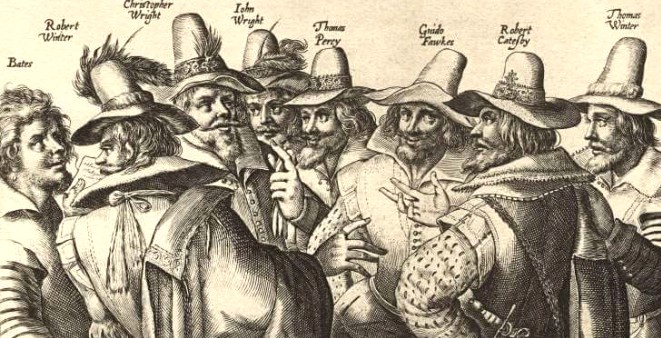
One of the remarkable features of Phelips’s career was that his failure in the King’s service as Speaker never proved a bar to his continuing promotion as a lawyer. It is perhaps also a reminder of James’s lack of regard for parliament, which he always maintained misrepresented the feelings of the nation at large. On July 17th 1604 Phelips was appointed justice of common pleas in the County Palatine of Lancaster[12] and served on the next two northern circuits as an assize judge.[13] His savage treatment of recusants who appeared before him attracted a good deal of attention in an area notorious for the size of its Catholic population. In the winter circuit of 1604 he condemned one man to death simply for entertaining a Jesuit and was reported to have declared that as the law stood all who were present when mass was celebrated were guilty of felony. In fairness it should be said that it took some nerve to take action against the leading papists, such was the scale of their support at a time when they still hoped that the government might look favourably on their cause. Of one leading northern Catholic, Roger Withrington, it was said that ‘all must yield that lives with him, his power is so great,’ and that in parts of Northumberland ‘no sheriff may ride or other officer attempt to do anything without his liking.’[14] Undaunted by that reputation Phelips in open court denounced Withrington as being ‘most unmeet to bear any office or place of authority in this government.’[15] His measures on the summer circuit of 1605 were, if anything, even more severe and included pillorying, cutting off ears, and further death sentences. 600 people were indicted for recusancy at Lancaster and 1,000 at York, where, Phelips proudly told Cecil, ‘His Majesty’s gracious zeal and resolution in religion being made known, the applause and joy thereof appeared exceeding great in and to all sorts of people there present.’[16] But Phelips seems to have overstepped the mark, particularly in his dealings with Withrington, for the judges were told by Cecil not to ‘meddle’ with him, and Phelips did not return to the circuits again until the summer assizes of 1607. In his absence Siri Henry Withrington, Roger Withrington’s brother, became sheriff of Northumberland. Phelips was not completely out of favour, however, for he acted as counsel for the prosecution in the trial of the gunpower conspirators in January 1606. His contribution was a comparatively small one, but he opened the indictment against the plotters in a speech of great succinctness and clarity (unlike his parliamentary efforts), and made at least one timely intervention when the crown’s case showed signs of faltering.[17]
Largely because of the panic inspired by the gunpower plot, the session of parliament which began on January 21st 1606 was more harmonious than the first. For his part, Phelips could point to some successes. Three subsidies and six fifteenths were voted (though by a majority of only one), and for a time he held off legislation against purveyance. The Speaker certainly deserved some credit for calming tempers in the aftermath of John Hare’s contemptuous attack on the purveyors in a speech to the Lords on February 14th, and Phelips assured Cecil (now Earl of Salisbury) that the Commons were ‘innocent’ of the ‘gross error’ committed by Hare.[18] His technique nevertheless still relied mainly on petty delays and interruptions, which became increasingly unpopular as the efforts by the members of the Commons for regress of grievances intensified. On one occasion Phelips, having managed to postpone the bill against purveyance for a day, arrived late the following morning. His excuse ‘that having taken pills overnight which did not work as expected, he had not been well all night,’ was ridiculed by a witticism which circulated the chamber that he had ‘taken a pill from the purveyors.’[19]
Salisbury was no lover of lawyers, and it is therefore a little surprising that he kept in such close touch with Phelips both inside and outside parliament. Their surviving correspondence is concerned mostly with matters of business, but reveals that they respected one another and had a great deal in common. Unlike James, Salisbury appreciated and sympathised with Phelips’s problems in dealing with the House of Commons and encouraged the Speaker in his endeavours. In a typical letter he told Phelips ‘whomsover considers what variety follows multitudes, may not judge men’s counsels by success. That which they did the last day was like all your day’s labour careful and considerate.’[20] The King’s behaviour exasperated Salisbury as much as it did Phelips, and no doubt the Speaker nodded knowingly when his colleague referred with uncharacteristic frankness to the King whom ‘no man dare oppose in this needy world.’[21] Phelips’s success, particularly before 1608, depended largely on Salisbury’s influence, and he cultivated his favour assiduously. But the Speaker was so ambitious, with a high opinion of himself, that he fell to exaggerating the value of his services, and Salisbury must occasionally have felt that he was becoming a nuisance. At the end of the second session, for example, Phelips wrote to him hinting that he felt insufficiently rewarded for his pains. This and further letters to the King and to Salisbury again, outlining his services, all went unheeded, and on February 28th 1607 he wrote yet again to Salisbury, expressing a grievance common among crown officials: ‘I have in this employment (as Speaker) absolutely lost the fruit of my life four entire terms, three weeks parcel of other terms, and five whole circuits; besides the withdrawing of my clients and my charges. Yet hereby I have prevented and wrought many things for his Majesty.’[22] Having failed to get a 1500 acre manor, which he had recently had surveyor, he requested the grant of ‘leases in or near my native country.’[23] Despite these entreaties Phelips had to wait a little longer before any more patronage came his way and to endure another uncomfortable session of parliament.
One of the main issues at stake in the third session was the proposed union with Scotland, which the King was determined to achieve. Phelips struggled hard to win acceptance for it in the Commons against impossible odds. By the middle of March 1607 stalemate had been reached, and on the 16th the Commons ratified their decision that the Scots were not naturalised by the laws of the realm. Phelips was at this point taken ill with a slight chill, which would probably have kept him away for no more than a day or two. Salisbury was afraid that the Lower House would proceed to pass a resolution declaring invalid the opinion of the judges on the naturalization of the Post Nati,[24] which would undermine the proposed union still further, so he persuaded the Speaker to absent himself for a week (March 16th-24th)[25] to allow the government a breathing space, and on March 31st the King adjourned the House for three weeks, during which time efforts were probably made to wear down opposition to the scheme which was so dear to his heart.[26] When parliament reassembled it was at once evident that the chances of success were as remote as ever. Phelips frankly expressed his doubts about the outcome to Salisbury,[27] and once when he felt he had suffered a surfeit of personal criticism plainly stated to the House that he was acting under orders.[28] His influence had by this stage reached its nadir. His control of day-to-day business had vanished and the long and embarrassing silences mentioned by Bowyers bear witness to his ineffectiveness. When a petition on religion was unexpectedly called for to be ready on June 16th, Phelips found himself in desperate straits, for he had already secretly shown the petition to James who expressed his anger at it.[29] Describing what happened next to Salisbury, Phelips wrote ‘I was driven to oppose at several times 10 or 12 speakers, being not backed by the speech or anyone; and in the end, not without the distaste of many who misliked that myself should so often oppose their proposition, drew them that a committee should tomorrow in the afternoon view and report to them what hath been herein warranted by former precedents.’[30] Such a situation could hardly do the Speaker’s reputation any good. A further problem for Phelips was the growing use of the committee of the whole house, which enabled the Commons to replace him with a chairman of their own choice, and an increase in the number of other committees, in which the government was poorly represented.[31]
Phelips returned to the northern circuit in the summer of 1607.[32] Recusancy was still a serious problem, and a vicious attack by a gang of 44 ‘outlaws’ on the ecclesiastical commissioners of Yorkshire in May, in which the victims had barely escaped with their lives,[33] was but one indication that little had changed since his previous visit. But there were plenty of other matters to occupy Judge Phelips’s attention, and the manner in which he tracked down a thief named Pickering, who had robbed one of the King’s deputy lieutenants of £200 in January, suggests that he was more than able to deal with run of the mill criminal activities on circuit.[34] Phelips attended all the northern circuits, with Judge Altham, until the summer assizes of 1610, when he was transferred to the western circuit, where he joined Chief Justice Fleming.[35] Reporting his progress to Salisbury on September 10th 1609 Phelips remarked on the decrease in the number of recusants in Northumberland, Cumberland, Westmoreland and Lancashire, where only thirteen people had been executed.[36]
The years 1607-1610 were successful and prosperous ones for Phelips. He took care to keep on good terms with Salisbury and sent him occasional gifts. In September 1607 he offered to send him 60 deer of a size ‘unmatchable in our western parts’ for his chase at Cranborne in Dorset and in January 1609 presented him with a basin and ewer of 180 oz.[37] Salisbury was probably instrumental in directing some profitable favours Phelips’s way. He was granted a substantial amount of crown land in the north, particularly in the County Palatine of Lancaster, between about 1607 and 1609, and on December 2nd 1608 was given the reversion of the Mastership of the Rolls, one of the most lucrative and prestigious offices in the legal profession. While he was on circuit his income was probably in the region of £50,000 a year, making him one of the richest lawyers in the country.
The parliamentary session of 1610 was no more agreeable than earlier sessions for Phelips, and he was frequently criticised. His worst moment came in May 1610, when he delivered a message from the King forbidding further discussion on the question of impositions. It was known that James was away from London, and Phelips was pressed to reveal how he had received the message. He was told that ‘it hath grown into too much custom that the Speaker should bring messages from the King’ and that ‘he was the mouth of the House to the King and not from the King to the House,’ and Phelips was eventually forced to admit that the message came from the Privy Council.[38] The Speaker could hardly be held in any way responsible for the crucial event of the session, the failure of Salisbury’s Great Contract, but he was as unpopular as ever, as was evident in a bizarre incident which occurred at the end of the session. Phelips complained to the Commons that he had been insulted in the street by Sir Edward Herbert who had ‘popped his mouth with his finger in scorn,’ and the next day ‘put off his hat, put out his tongue and plopt with his mouth.’ Herbert said he had meant no offence to the House, but although Phelips was ‘worse satisfied than before,’ he got little sympathy and was told that he should not have said that he would complain to the King about the matter.[39]
The next three years marked the zenith of Phelips’s career. In December 1610 he was appointed Chancellor to Prince Henry, one of the leading positions in the heir to the throne’s enormous household, and about this time joined an informal dining club, which met regularly at the Mitre tavern in London. Its members included a number of officials in Prince Henry’s retinue, as well as lawyers and members of parliament. Among them were John Donne, Inigo Jones, Arthur Ingram, John Hoskyns, Richard Martin, Sir Henry Wotton and Lionel Cranfield. The common interest of this interesting circle was said to be the high standard of wit and the expectation of preferment at court.[40] On January 14th 1611 Phelips at last succeeded to the post of Master of the Rolls on the death of Baron Bruce of Kinloss. That it was highly prized among lawyers is borne out by the fact that Sir Charles Caesar advanced the enormous sum of £15,000 to secure the appointment in 1639. If Phelips had been found wanting as a parliamentarian, the same could not be said of his conduct in Chancery. His fellow lawyers, among them Lord Chief Justice Sir Edward Montague and Attorney General Sir Henry Yelverton all spoke highly of his performance. Chief Justice Sir Edward Coke, who knew him as well as anyone, and whose opinion is probably the most valuable, said of him, ‘As for this Master of the Rolls, never man in England was more excellent in Chancery than that man; and for aught I heard (that had reason to hear something of him), I never heard him taxed with corruption, being a man of excellent dexterity, diligent, early in the morning, ready to do justice.’[41]
Salisbury’s death in May 16 had no adverse effect on Phelips’s position. Indeed so confident was he about his prospects that he made a bid later in the year for the Lord Treasurership itself.[42] It also says something for Phelips’s status at this time that he survived the political reshuffling which followed Prince Henry’s unexpected death in November 1612, virtually unscathed, when others were not so fortunate. Phelips by contrast seems to have been riding on the crest of the wave. In February 1613 he was one of the main organisers of a magnificent masque staged as part of the celebrations of Princess Elizabeth’s marriage. The King was highly delighted with the affair, which was in the best (or worst) tradition of Jacobean extravagance, and an eyewitness (Chamberlain) remarked that he ‘stroked the Master of the Rolls and Dick Martin who were the chief doers and undertakers.’[43] In the same year Phelips was appointed ranger of all the parks, chases and forests in England and a commissioner for the sale of crown lands, and was also employed by the Queen to negotiate an arrangement to farm the sugar customs.[44]
Possibly because of age or ill health Phelips decided not to offer himself as candidate in the elections of 1614, but he was determined that his son should succeed him as one of the knights for Somerset. The election was bitterly contested, and Sir Robert Phelips was unexpectedly defeated by Sir Maurice Berkeley and John Poulett and hat to be content with a borough seat.[45] Sir Robert was largely responsible for the outcome, but his father was partly to blame, for he had set about soliciting support for his son at court with such vehemence that his tactlessness soon became a severe embarrassment to his highly placed friends. One of them, Viscount Lisle, told him in a letter of March 28th 1614, ‘the cause of strife being taken away I trust to see you restored to the former kindness towards your friends, and they in like respect towards you, whom else this controversy was like to put far asunder.’[46] We do not know exactly what Phelips was up to during the ‘Addled’ Parliament, but shortly after the dissolution he received a devastating shock when he was dismissed from the commission of the peace for Somerset.[47] Chamberlain gives the following explanation: ‘… the Master of the Rolls that was in great favour with the King hath lost his conceit about this business, for there be many prescriptions that his hand was in it, his son being so busy and factious in the house, and Hoskyns one of his chief consorts and minions so far engaged, besides divers untoward speeches of his own, and a notorious envy that anything should succeed better under another speaker than himself.’ There is no reason to doubt this account. Hoskyns was one of the government’s fiercest critics in the 1614 Parliament, especially on the question of impositions, and was among those who received the severest punishment after the dissolution. Phelips was a close friend of Hoskyns and, if he had been seen ‘consorting’ with him during the parliamentary sessions, was probably tarred with the same brush as his outspoken colleague. There is, however, a little more to Sir Robert Phelips’s behaviour than Chamberlain suggests. His speeches in parliament and especially his vitriolic denunciation of Bishop Neile, could not have done his father’s reputation as a crown servant any good. But whether Phelips senior condoned his son’s dealings with Sir Henry Neville is another matter.[48] The two Phelips had a tremendous row about this, and Sir Edward sent his son packing and cut off his allowance as a result.[49] Thereafter Sir Robert, who had already incurred his father’s displeasure because of ‘errors in his expenses’ and disagreements with his step-mother, made arrangements to go abroad.[50] The other reason given by Chamberlain for Sir Edward’s disgrace – envy of Sir Randall Crew – is almost certainly true; Phelips had struggled long and hard in the 1604-10 Parliament before any substantial rewards came his way. Crew, on the other hand, could claim no credit whatever for presiding over the fiasco of the 1614 Parliament, yet he quickly won the king’s favour. Phelips seems also to have been upset by Sir Ralph Windwood’s promotion to the secretaryship, especially as Winwood had no parliamentary experience and made a poor showing in the ‘Addled’ Parliament. Phelips was exceptionally ambitious and is likely to have felt that Crew and Winwood had been promoted over his head. Phelips’s last months were not happy. His reputation at court had vanished, although he was still Master of the Rolls. A final snub from the King, while hunting at Wanstead, was the last straw,[51] and he died shortly afterwards, on September 14th 1614, and was buried at Montacute on September 25th.
Sir Edward Phelips was not a particularly attractive character, but he deserves more attention than is given to him in most accounts of the period. Notestein’s study of the 1604-10 Parliament makes it clear that his ineffectiveness in the House of Commons contributed to the development of a rift between the crown and parliament. Phelips’s success as a lawyer shows him in a much better light and is illustrative of the rewards which were available to judges who kept their wits about them, and adjusted to changes in the political climate emanating from the court, in the early Jacobean era. At the same time his very close contact with Salisbury, a feature of his career which has never been fully investigated, is a reminder of the extent to which Salisbury monopolized power in the early years of James I’s reign.
Footnotes:
[1] W. Notestein, The House of Commons 1604-1610 (1971), especially chapter 7.
[2] Somerset Heritage Centre, Phelips Manuscripts ref. DD/PH/224/2, DD/PH/224/3, DD/PH/224/4, DD/PH/228/14, DD/PH/229/1.
[3] J. Hutchinson, A Catalogue of Notable Middle Templars (1902) and M. Strachen, The Life and Adventures of Thomas Coryate (1962).
[4] Historical Manuscripts Commission’s 9th Report, Calendars of the MSS. of the Marquis of Salisbury, preserved at Hatfield. (generally) parts XV-XVIII.
[5] Calendar of State Papers Domestic 1603-10.
[6] J.S. Cockburn, History of English Assizes 1558-1714.
[7] Historical Manuscripts Commission’s 9th Report, Calendars of the MSS. of the Marquis of Salisbury, preserved at Hatfield. (generally) parts XV-XVIII.
[8] Historical Manuscripts Commission, Duke of Buccleuch’s MSS., vol.III.
[9] See, for example, two speeches in the Journals of the House of Commons, pp.146-8, 253-33, extraordinary specimens of verbosity by any standards.
[10] E.R. Foster, ‘Speaking in the House of Commons’, Bulletin of I.H.R. (1970).
[11] W. Notestein, The House of Commons 1604-1610 (1971); D.H. Wilson, Privy Councillors in the House of Commons 1604-29 (1971).
[12] Calendar of State Papers Domestic 1603-10.
[13] J.S. Cockburn, History of English Assizes 1558-1714.
[14] Historical Manuscripts Commission’s 9th Report, Calendars of the MSS. of the Marquis of Salisbury, preserved at Hatfield. (generally) parts XV-XVIII.
[15] J.S. Cockburn, History of English Assizes 1558-1714.
[16] Historical Manuscripts Commission’s 9th Report, Calendars of the MSS. of the Marquis of Salisbury, preserved at Hatfield. (generally) parts XV-XVIII.
[17] State Trials, 2, pp.165-6; P. Durst, Intended Treason (1970), 239-40.
[18] The Parliamentary Diary of Robert Bowyer 1606-7, ed. D.H. Wilson (1931).
[19] The Parliamentary Diary of Robert Bowyer 1606-7, ed. D.H. Wilson (1931).
[20] Somerset Heritage Centre, Phelips Manuscripts ref. DD/PH/219/4, undated but probably written during the second session. These letters from Cecil to Phelips (not to my knowledge used elsewhere) show Cecil in a surprisingly attractive light.
[21] Somerset Heritage Centre, Phelips Manuscripts ref. DD/PH/221/10.
[22] Historical Manuscripts Commission’s 9th Report, Calendars of the MSS. of the Marquis of Salisbury, preserved at Hatfield. (generally) parts XV-XVIII.
[23] Historical Manuscripts Commission’s 9th Report, Calendars of the MSS. of the Marquis of Salisbury, preserved at Hatfield. (generally) parts XV-XVIII.
[24] The Parliamentary Diary of Robert Bowyer 1606-7, ed. D.H. Wilson (1931).
[25] Journals of the House of Commons. There were no arrangements at this time for a deputy to take his place.
[26] W. Notestein, The House of Commons 1604-1610 (1971), especially chapter 7.
[27] The Parliamentary Diary of Robert Bowyer 1606-7, ed. D.H. Wilson (1931).
[28] W. Notestein, The House of Commons 1604-1610 (1971), especially chapter 7.
[29] The Parliamentary Diary of Robert Bowyer 1606-7, ed. D.H. Wilson (1931).
[30] The Parliamentary Diary of Robert Bowyer 1606-7, ed. D.H. Wilson (1931).
[31] W. Notestein, The House of Commons 1604-1610 (1971); D.H. Wilson, Privy Councillors in the House of Commons 1604-29 (1971).
[32] J.S. Cockburn, History of English Assizes 1558-1714.
[33] Historical Manuscripts Commission’s 9th Report, Calendars of the MSS. of the Marquis of Salisbury, preserved at Hatfield. (generally) parts XV-XVIII.
[34] Historical Manuscripts Commission’s 9th Report, Calendars of the MSS. of the Marquis of Salisbury, preserved at Hatfield. (generally) parts XV-XVIII.
[35] J.S. Cockburn, History of English Assizes 1558-1714.
[36] Calendar of State Papers Domestic 1603-10.
[37] Historical Manuscripts Commission’s 9th Report, Calendars of the MSS. of the Marquis of Salisbury, preserved at Hatfield. (generally) parts XV-XVIII.
[38] Journals of the House of Commons.
[39] W. Notestein, The House of Commons 1604-1610 (1971), especially chapter 7.
[40] M. Prestwick, Cranfield, Politics and Profits under the Early Stuarts (1966).
[41] E. Foss, Judges of England (1848-64).
[42] Historical Manuscripts Commission, Duke of Portland’s MSS., vol. IX, 39, ‘Neither can I tell who shall be Treasurer. Northampton finds some opposition and the town holds the Master of the Rolls a good husband for the Prince, and this imagination seems confirmed by his sudden going to Royston…’ (Holles to Digby, 28 November 1612).
[43] The Progress of James I, ed. J. Nichols (1828-).
[44] Dictionary of National Biography; Historical Manuscripts Commission, Various Collections, vol. VIII; Somerset Heritage Centre, Phelips Manuscripts ref. DD/PH/212/21.
[45] E. Farnham, ‘The Somerset Election of 1614’, English Historical Review (1931).
[46] E. Farnham, ‘The Somerset Election of 1614’, English Historical Review (1931).
[47] Sir John Savile, Sir Roger Owen and Nicholas Hyde were also removed, see T.L. Moir, The Addled Parliament of 1614 (1958). Phelips had been a J.P. since at least 1595 and probably much earlier (the records are missing), although he had not been very active at Quarter Sessions. It was, of course, the principle of membership which was important.
[48] E. Farnham, ‘The Somerset Election of 1614’, English Historical Review (1931).
[49] Somerset Heritage Centre, Phelips Manuscripts ref. DD/PH/224/80. Phelips found positions for his son in Prince Henry’s household and in Chancery, but they were never on good terms.
[50] E. Farnham, ‘The Somerset Election of 1614’, English Historical Review (1931).
[51] ‘Sir Edward Phelips, Master of the Rolls, the King having killed a very fat buck at Wanstead, said to the King… I hope your Majesty and I shall live to kill many more here as fat as this, the King answering him in contempt… Yes you and I, the good old man took it so to heart that he died shortly after.’ (E. Farnham, ‘The Somerset Election of 1614’, English Historical Review, 1931). Whitelocke commented, ‘It is thought that grief he took in the King’s displeasure towards him for his son’s roughness in the parliament hastened his death. But I cannot think a man be such a mope.’ (Liber Familicus of Sir James Whitelock, ed. J. Bruce, Camden Society, 1858).
See also:
- Phelips Manuscripts 1249-1954 (ref. DD/PH) held at the Somerset Heritage Centre
- Edward Phelips, The History of Parliament online (IHR)
- The Phelips’s family home: Montacute House (National Trust)
Visit Spotlight on SDNQ to discover more research themes.